A well-maintained door lasts years longer and breaks down less often. Here is what good upkeep looks like, and where a professional visit fills the gaps.
Get a Free Estimate
Same-Day Service
Free Estimates
Locally Owned
24/7 Emergency
What Garage Door Maintenance Actually Looks Like
Most doors do not need much. The basics take about ten minutes a few times a year, and they make a real difference in how long everything holds up. The goal is simple: catch small problems before they become expensive ones, and keep moving parts moving smoothly.
Start with a visual check. Open and close the door a few times and watch the movement. It should travel in a straight line, both sides moving at the same pace. If one side lags, or if the door shudders or jerks, that is worth paying attention to. Listen while it runs. Grinding, scraping, or a new high-pitched squeal usually means a roller or hinge needs lubrication or replacement. A door running quietly last month and noisily now has changed, and something caused that change.
Lubricate the hinges, rollers, and springs once or twice a year using a lithium grease or silicone-based lubricant. Do not use WD-40. It is a solvent, not a lubricant, and it strips the existing grease from metal surfaces rather than adding to it. A dedicated garage door lubricant spray runs a few dollars at any hardware store and does the job correctly. Test the auto-reverse safety feature monthly by placing a 2×4 flat on the ground in the center of the door opening. Press the close button. The door should contact the board and reverse direction within one to two seconds. If it does not reverse, stop using the door until a technician adjusts the opener’s force settings.
Check the bottom rubber seal by closing the door fully and looking at the contact line from inside the garage. The seal should lie flat against the floor with no visible gaps. Cracks, tears, or sections that have pulled away let in cold air, moisture, and pests. Seal replacements are one of the few parts a homeowner can swap without special tools. What requires a professional is everything behind the visible surface: spring tension, cable condition, drum wear, track alignment, and opener force calibration. Our technician checks all of it during an annual visit using direct contact with the hardware rather than a walk-around inspection.
Maintenance looks different each season. Cleveland’s freeze-thaw cycle makes fall the most important time to schedule a professional inspection.
Why Cleveland Weather Is Harder on Garage Doors Than Most
Manufacturer maintenance schedules are written for average conditions. Cleveland is not average. Northeast Ohio runs through a full range of temperature extremes, from summer humidity in the 80s to winter lows that dip well below freezing, often multiple times in a single week during shoulder seasons. That freeze-thaw cycling is the main problem.
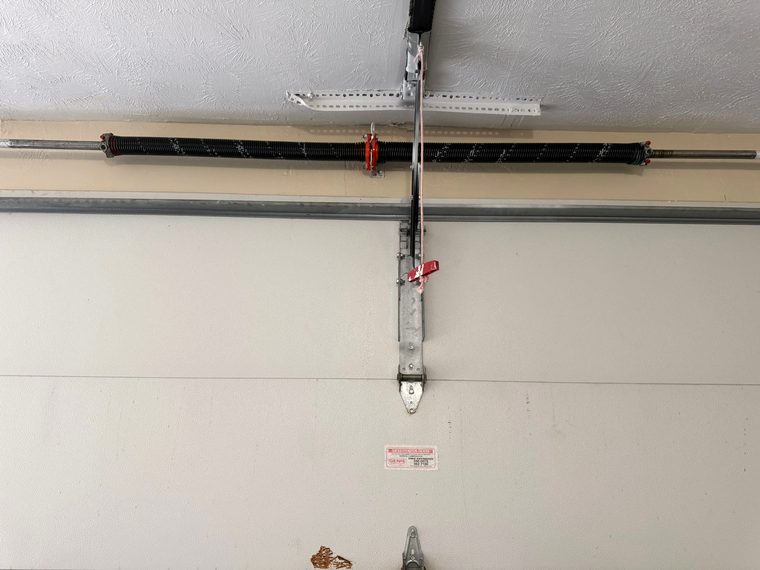
Springs are the most affected component. Metal contracts in the cold and expands in the heat, and every cycle adds cumulative stress to the coil. A standard spring rated for a certain number of cycles will reach the end of its life faster in Cleveland than the same spring would in a mild climate. If your door gets harder to lift manually in January, stiff springs from cold contraction are usually why.
Seals harden and crack faster in cold weather than in temperate climates. A seal that looked fine in September may have cracked gaps by November. Once a seal loses its contact with the floor, water and cold air come through, and the freeze-thaw process then works on the floor and the door bottom as well. Lubricants break down faster under temperature extremes too. If you lubricated the door last spring, that product may be less effective by mid-winter. Consider a second light application in October before temperatures drop consistently.
Spring is the right time for a full visual check: winter is hard on doors, and spring is when the damage shows up. Fall is the best time to schedule a professional inspection before winter sets in. Catching a worn spring or a failing seal in October is far better than dealing with a broken door in January when temperatures are below freezing and the car needs to get out.
If the door feels unusually heavy to lift by hand, or the opener is straining harder than usual, do not ignore it. That load is either a spring losing tension or an opener working outside its rated range. Both get worse before they get better without a technician involved.
Cleveland winters are harder on springs, seals, and lubricants than the schedules manufacturers assume. Annual service keeps up with the pace.
Cleveland Homeowners Who Stay Ahead of Repairs
             Posted on Google        Michael Kesegich     Trustindex verifies that the original source of the review is Google. Replace spring and drums as well as installing a new keypad. Tidied up after themselves very friendly arrived on time very knowledgeable showed me all of his work. I would definitely recommend using the service..         Posted on Google        Albertha P Burkett Jones     Trustindex verifies that the original source of the review is Google. He came to my house and replaced my garage door springs I will recommend on you thank you         Posted on Google        Victoria Moore     Trustindex verifies that the original source of the review is Google. The gentlemen came to repair my garage door and he was pleasant and professional. My garage opener is performing excellent.         Posted on Google        Elijah Nawrot     Trustindex verifies that the original source of the review is Google. Great service. They came out quickly, fixed my garage door, and explained everything clearly. Super friendly and professional. Definitely recommend Procare Garage Door Repair in Medina.         Posted on Google        Kathy Lathwell     Trustindex verifies that the original source of the review is Google. Called them at noon and they were here before 2:00. Thoroughly explained the process to identify the problem. Replaced the remotes which was the easiest fix. Very satisfied!         Posted on Google        Brian Orwick     Trustindex verifies that the original source of the review is Google. Very quick response, great communication, and great work! Would recommend!         Posted on Google        alex castillo     Trustindex verifies that the original source of the review is Google. Overall great experience. I called in the morning and a few hours later the technician was already working on our garage door. Jacob did a great job explaining the problem and giving us choices on how to fix the problem.         Posted on Google        Kateryna Castro     Trustindex verifies that the original source of the review is Google. Excellent work done, the garage was fixed for a good price and the communication was great. Would highly recommend!         Posted on Google        Tony Olbrys     Trustindex verifies that the original source of the review is Google. Ben
replaced the springs and drums the service was great and a job was done right and I'm very pleased         Posted on Google        Justin Reeder     Trustindex verifies that the original source of the review is Google. Ben did an excellent job replacing our garage spring! They came out same day, price reasonable, warranty awesome. Highly recommend              Verified by Trustindex  Trustindex verified badge is the Universal Symbol of Trust. Only the greatest companies can get the verified badge who has a review score above 4.5, based on customer reviews over the past 12 months. Read more
Questions About Garage Door Maintenance
How often should I lubricate my garage door?
Once or twice a year is enough for most doors. Apply a lithium grease or silicone-based lubricant to the hinges, rollers, and springs. Avoid WD-40. It is a solvent, not a lubricant, and it strips the existing grease from metal components rather than adding protection.
What is the auto-reverse test and how do I do it?
Place a 2×4 flat on the ground in the center of the door opening. Press the close button. When the door contacts the board, it should reverse direction within one to two seconds. If it does not reverse, the auto-reverse safety feature needs adjustment. Call a technician before using the door again.
What maintenance can I do myself, and what needs a professional?
Homeowners can safely lubricate hinges and rollers, inspect the bottom seal, and run the auto-reverse test. Any work involving springs, cables, or the opener mechanism should be left to a technician. Springs are under significant tension and can cause serious injury if handled without the right tools and training.
Why does Cleveland weather make maintenance more important?
Cleveland’s freeze-thaw cycles put repeated stress on springs and seals across the fall, winter, and spring months. Metal contracts and expands with every temperature swing, and seals harden and crack faster in the cold. Lubricants also break down faster under temperature extremes. Doors in Northeast Ohio typically need more attention than standard manufacturer schedules assume.
What does an annual professional inspection cover?
Our technician checks spring tension and remaining cycle life, cable condition, roller and hinge wear, track alignment, opener force settings, sensor alignment, and the bottom seal and weatherstripping. Most of this requires direct hands-on inspection and cannot be assessed from a visual walk-around.
How do I check my bottom door seal?
Close the door fully and look at the contact line from inside the garage. The seal should lie flat against the floor with no visible gaps. Cracks, tears, or sections that have pulled away let in cold air, moisture, and pests. Replacement seals are available at hardware stores and are one of the few parts homeowners can swap themselves without special tools.
What Maintenance Leads To
Opener Repair
Openers wear from the inside and often fail without warning. We test the motor, sensors, and travel limits during maintenance and fix small issues before the opener quits.
Learn More
Spring Replacement
Springs are the most common thing we find during maintenance checks. If yours are worn or the tension is off, we replace them before they fail.
Learn More
Cable Replacement
Cables fray gradually and are easy to miss without a close inspection. We check them on every maintenance visit and replace them before they snap.
Learn More
Ready for an Annual Inspection?
We cover everything a homeowner cannot check from the outside. One visit, free estimate, no pressure.